






Pansophia

Category Quick Links
🏃
Movement
🫀
Resonance
🌡
Regulation
🪨
Grounding
🧠
Body Memory
💀
Memento mori
👃
Senses
🛌
Rest
🌊
Co-regulation
🌪
Trauma
⚠️
Perfectionism
🧠
Nervous System
🧠
Neuroception
🍽
Inner Hunger
💦
Sweat
⚖️
Autonomic Balance
🔁
Hormones
🌊
Emotion
📣
Sensory Overload
🧘
Somatics
👿
Misanthropy
🌬
Breath
🌪
The Gut
🕸
Fascia
💧
Lymph
🧘♀️
Embodiment
🖐
Touch
🫁
Interoception
🧱
Pain
🌀
Polyvagal Theory
🪑
Posture
⚠️
Perfectionism

Definition
noun
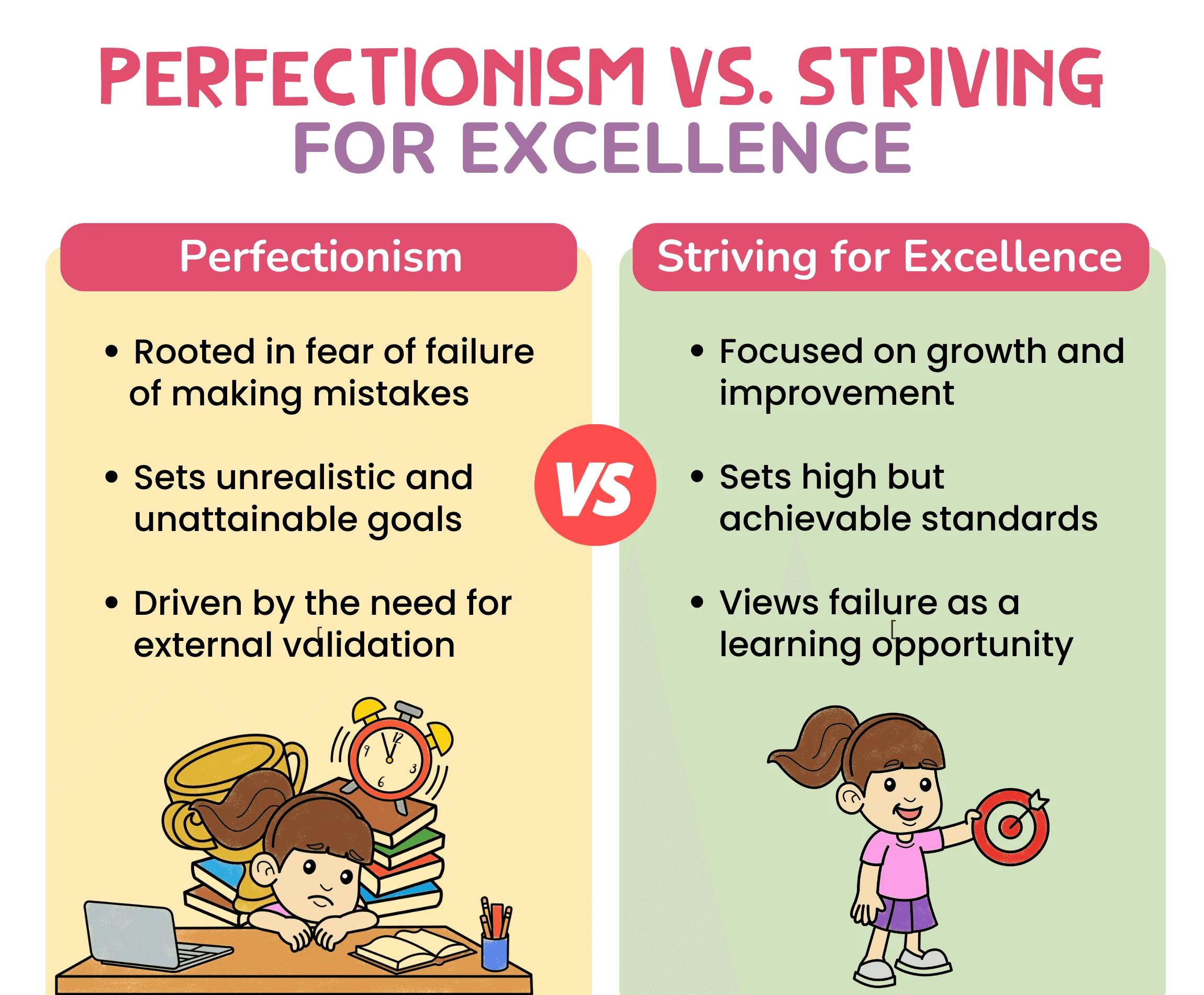
Perfectionism is a personality trait characterized by setting excessively high standards for oneself and others, accompanied by critical self-evaluations. It's not a mental health condition itself, but it can be a contributing factor to various mental health disorders like anxiety, depression, and eating disorders.
Key characteristics of perfectionism:
Setting extremely high standards: Perfectionists often strive for flawlessness and have a strong desire to avoid mistakes.
Excessive self-criticism: They are highly critical of their own performance and may feel their work is never good enough.
Concern about others' evaluations: Perfectionists may worry about how others perceive them and their achievements.
Procrastination: Fear of not meeting high standards can lead to procrastination.
Difficulty accepting imperfections: They may struggle to accept mistakes or limitations.
Types of perfectionism:
Self-oriented perfectionism: Setting high standards for oneself.
Other-oriented perfectionism: Setting high standards for others.
Socially-prescribed perfectionism: Believing that others expect perfection from them.

Interpretation
"A beautiful thing is never perfect." - Egyptian Proverb

Living Invitation
Notice what in your life you are not finishing because you are trying to perfect it? Write it down and read that sentence out loud.

Video